Core Web Vitals (LCP, CLS, INP): Frontend Performance That Actually Matters
A deep, practical guide to Core Web Vitals for frontend interviews: what LCP/CLS/INP measure, common causes, how to debug in DevTools, and high-impact fixes.
On this page
If you want a “senior frontend” signal, understand Core Web Vitals.
Interviews increasingly ask:
- “How do you improve LCP?”
- “Why is CLS high?”
- “What is INP and how do you fix it?”
This guide is practical: what they mean, how to debug, and what fixes actually move the needle.
30‑second interview answer
Core Web Vitals measure real user experience: LCP (loading), CLS (visual stability), and INP (interaction responsiveness). Improve LCP by optimizing critical resources (images, fonts, server response), CLS by reserving space and avoiding late layout shifts, and INP by reducing main-thread work and long tasks. Always validate with field data (CrUX/RUM) and lab tools (Lighthouse/DevTools).
Key points
- LCP is often image/font/server-time related.
- CLS is about unexpected layout changes.
- INP is about long tasks and responsiveness.
- Measure: field + lab.
1) The three Core Web Vitals
LCP (Largest Contentful Paint)
- measures: time until the largest above-the-fold content element is rendered
- think: hero image, big heading, main banner
CLS (Cumulative Layout Shift)
- measures: visual stability (unexpected layout movement)
- think: page jumps while loading
INP (Interaction to Next Paint)
- measures: responsiveness of interactions (click/tap → next paint)
- replaces FID as the main responsiveness metric
2) What good scores look like (rules of thumb)
Google’s general guidance (approx):
- LCP: good ≤ 2.5s
- CLS: good ≤ 0.1
- INP: good ≤ 200ms
(Exact thresholds evolve, but the debugging/fix approach stays the same.)
3) LCP: what causes it (and how to fix)
Common LCP causes
- Slow server response (TTFB)
- Heavy JS delaying rendering
- Unoptimized hero image
- Render-blocking CSS
High-impact fixes
- Serve hero images as optimized formats (AVIF/WebP)
- Preload the LCP resource
- Reduce JS on initial route (code-splitting)
- Cache aggressively at CDN
Frontend interview answer:
- identify the LCP element, then optimize its load path (server + network + render).
4) CLS: why layouts shift
CLS happens when something changes layout after initial render.
Common causes:
- images without width/height
- ads/embeds inserted late
- fonts swapping (FOIT/FOUT)
- dynamic content injected above existing content
Fixes:
- always reserve space (width/height or aspect-ratio)
- use
font-display: swap+ preload critical fonts - avoid injecting content above the fold after render
5) INP: the new responsiveness metric
INP is about the worst interactions.
Common causes:
- long tasks on main thread
- expensive event handlers
- heavy re-renders
- large DOM updates
Fixes:
- break long tasks (
requestIdleCallback, chunk work) - debounce/throttle hot handlers
- use virtualization for big lists
- avoid layout thrashing
6) How to debug (interview-ready)
A) Chrome DevTools Performance
- record page load
- look for:
- long tasks
- scripting time
- layout/paint hot spots
B) Lighthouse
- quick score + audit hints
C) Web Vitals extension / RUM
- real users matter more than lab tests
7) Fix order: what to do first
- Reduce TTFB (CDN + caching)
- Fix hero image (LCP)
- Remove render-blocking CSS
- Reduce JS + hydration cost
- Stabilize layout (CLS)
- Improve interactivity (INP)
8) Interview Q&A
Q: How do you improve LCP?
- optimize the LCP element’s load path: server, preload, image optimization, reduce blocking JS/CSS.
Q: Common CLS fix?
- reserve space for images/embeds; avoid layout changes above the fold.
Q: What is INP?
- responsiveness metric measuring interaction latency to next paint; fix by reducing main-thread work.
Summary checklist
- I can define LCP/CLS/INP.
- I can list top causes of each.
- I know lab vs field measurement.
- I can propose high-impact fixes.
Summary
- LCP = load/render of largest element.
- CLS = stability.
- INP = interaction responsiveness.
- Debug with Performance + Lighthouse + real-user data.
Looking for structured, offline interview prep?
Free online lessons • Portable Amazon Kindle / Paperback
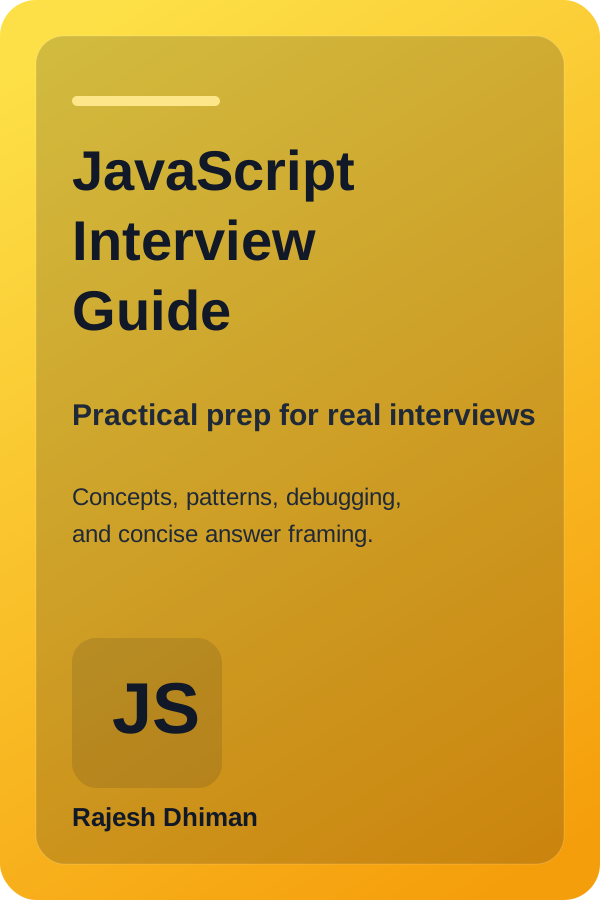
JavaScript Interview Guide
By Rajesh Dhiman
Deep dive into the Event Loop, microtask draining, closures, prototypal inheritance, and asynchronous execution patterns.
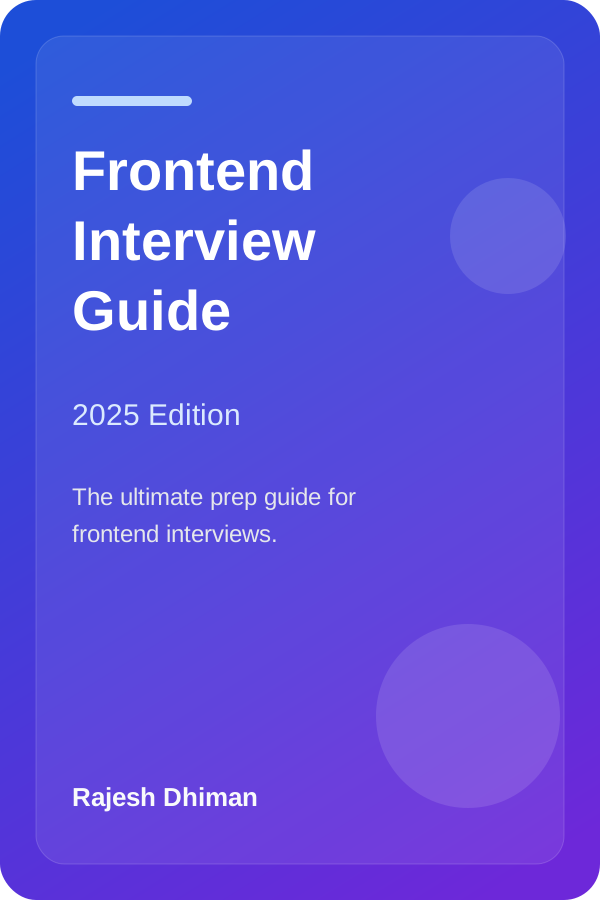
Frontend Interview Guide (2025 Edition)
By Rajesh Dhiman
Comprehensive preparation covering React internals, Web Performance, CSS architecture, and system design questions.
Note: All lessons on Frontend Interview remain completely free to read online. As an Amazon Associate, we may earn from qualifying purchases.
Written by Rajesh Dhiman
Authored by Rajesh Dhiman and engineered at Eunix Tech. Focused on deep-dive frontend engineering, JavaScript runtime internals, React architecture, and web performance.