CSS Positioning: static/relative/absolute/fixed/sticky
How positioning works, stacking contexts, and what trips people up in interviews.
On this page
30‑second interview answer
position controls how an element is laid out. static is default. relative keeps its place but can be offset and becomes an anchor for absolutely positioned children. absolute is removed from normal flow and positioned relative to the nearest positioned ancestor. fixed is relative to the viewport. sticky behaves like relative until a scroll threshold, then sticks.
The types (quick but clear)
static
- normal flow
top/leftdon’t apply
relative
- stays in flow
top/leftoffsets visually- creates positioning context for children
absolute
- removed from flow
- positioned relative to nearest ancestor that is not static
fixed
- removed from flow
- attached to viewport
sticky
- hybrid: relative + fixed
- requires scroll container context
The #1 absolute positioning rule
If you want a child to be absolute within a card:
.card { position: relative; }
.badge { position: absolute; top: 8px; right: 8px; }
Stacking context / z-index (common confusion)
z-indexworks only on positioned elements (and some layout contexts).- Creating new stacking contexts can make elements appear behind unexpectedly.
Interview-safe approach:
“I debug with DevTools layers and simplify stacking contexts.”
Mini Q&A
Q1: Absolute is relative to what?
- Nearest positioned ancestor.
Q2: Difference between fixed and sticky?
- fixed always sticks; sticky sticks after threshold.
Q3: Why set parent relative?
- So absolute children position within it.
Summary checklist
- I can explain each position type.
- I know absolute anchoring rule.
- I can use sticky correctly.
- I understand basic stacking context.
Looking for structured, offline interview prep?
Free online lessons • Portable Amazon Kindle / Paperback
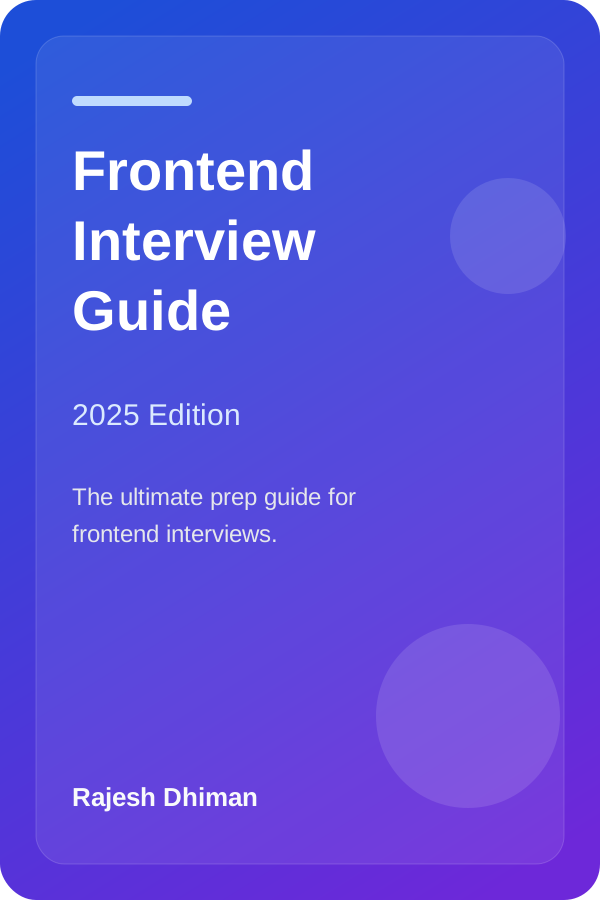
Frontend Interview Guide (2025 Edition)
By Rajesh Dhiman
Comprehensive preparation covering React internals, Web Performance, CSS architecture, and system design questions.
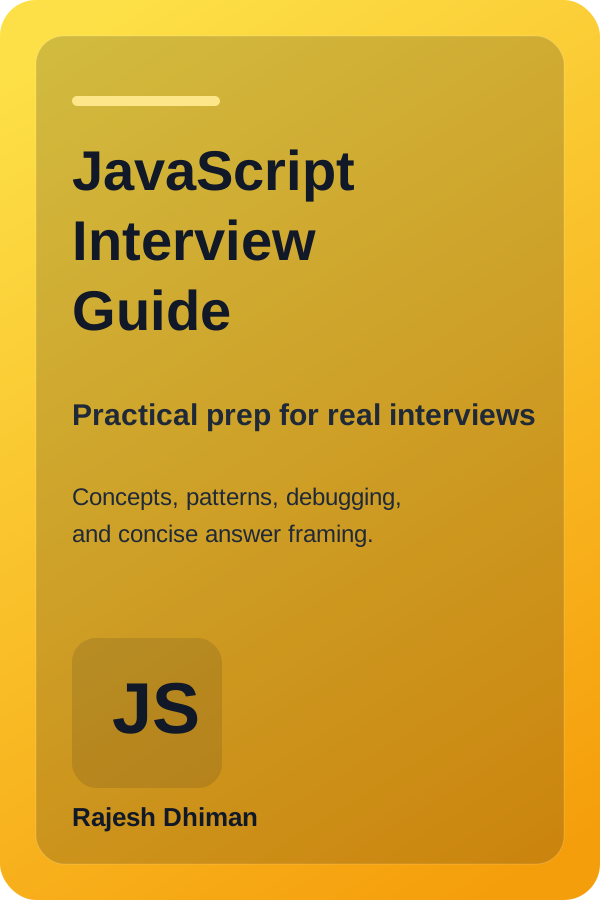
JavaScript Interview Guide
By Rajesh Dhiman
Deep dive into the Event Loop, microtask draining, closures, prototypal inheritance, and asynchronous execution patterns.
Note: All lessons on Frontend Interview remain completely free to read online. As an Amazon Associate, we may earn from qualifying purchases.
Written by Rajesh Dhiman
Authored by Rajesh Dhiman and engineered at Eunix Tech. Focused on deep-dive frontend engineering, JavaScript runtime internals, React architecture, and web performance.