Mastering JavaScript Async/Await
A comprehensive guide to understanding and using async/await in JavaScript for cleaner asynchronous code.
On this page
Mastering JavaScript Async/Await
Async/await makes asynchronous code look and behave more like synchronous code. Let's master it!
Understanding Promises First
Before diving into async/await, you need to understand Promises.
The Async Keyword
The async keyword makes a function return a Promise.
The Await Keyword
The await keyword makes JavaScript wait until a Promise settles.
Error Handling
Use try/catch blocks to handle errors in async functions.
Best Practices
- Always handle errors
- Don't forget to await
- Use Promise.all for parallel operations
- Avoid mixing callbacks with async/await
Conclusion
Async/await is a game-changer for writing asynchronous JavaScript code.
Looking for structured, offline interview prep?
Free online lessons • Portable Amazon Kindle / Paperback
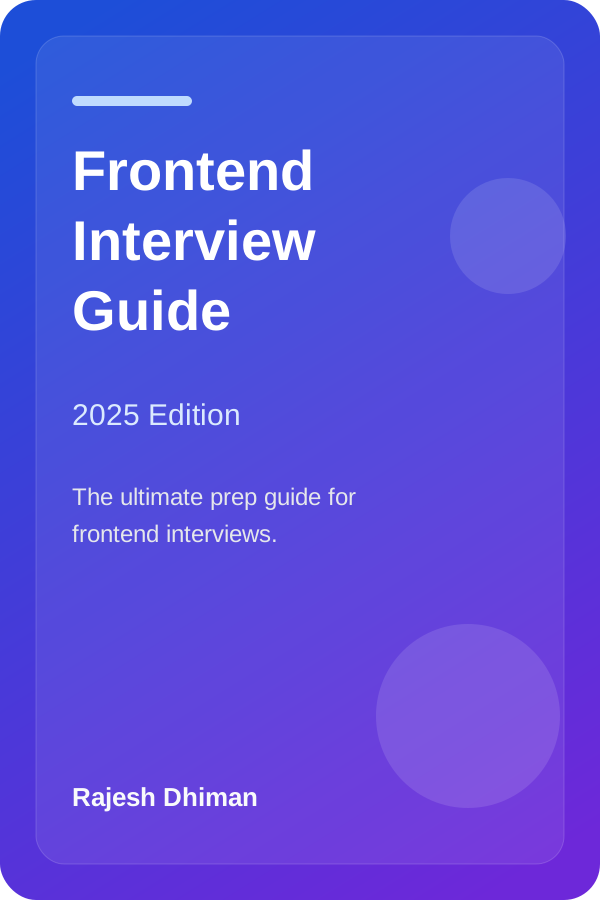
Frontend Interview Guide (2025 Edition)
By Rajesh Dhiman
Comprehensive preparation covering React internals, Web Performance, CSS architecture, and system design questions.
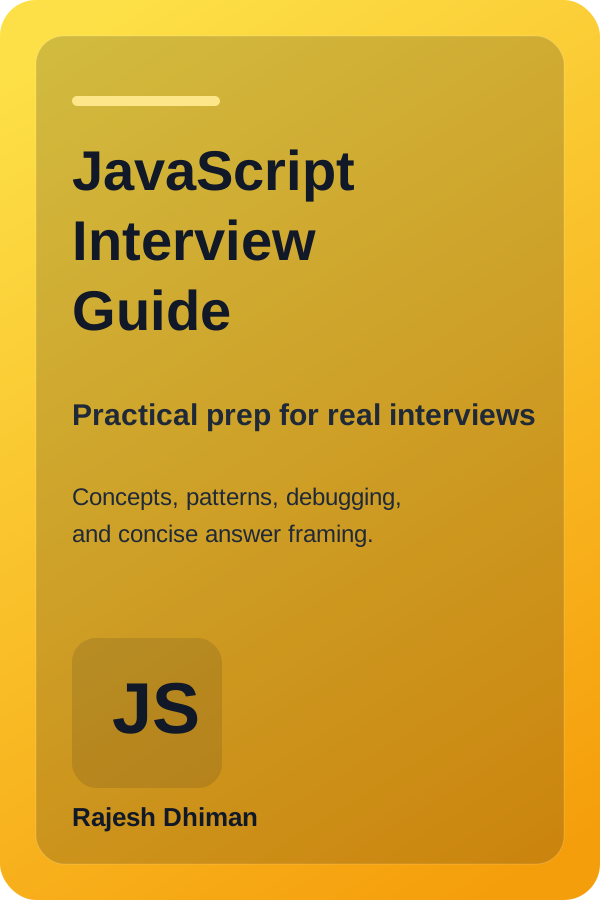
JavaScript Interview Guide
By Rajesh Dhiman
Deep dive into the Event Loop, microtask draining, closures, prototypal inheritance, and asynchronous execution patterns.
Note: All lessons on Frontend Interview remain completely free to read online. As an Amazon Associate, we may earn from qualifying purchases.
Written by Rajesh Dhiman
Authored by Rajesh Dhiman and engineered at Eunix Tech. Focused on deep-dive frontend engineering, JavaScript runtime internals, React architecture, and web performance.