Measuring Performance: Lighthouse vs RUM (and Setting Budgets)
How to measure performance like a pro: lab vs field metrics, what to trust, and how to set practical budgets to prevent regressions.
On this page
What you’ll learn
- Lab metrics vs field metrics
- Why Lighthouse can mislead you
- How to set budgets that teams actually follow
30‑second interview answer
Lighthouse is lab testing: controlled conditions, good for debugging and regressions. RUM (Real User Monitoring) is field data: what real users experience. The best setup uses both: Lighthouse in CI for guardrails, and RUM for truth. Budgets should focus on the few things that correlate with user pain: CWV, long tasks/INP, and bundle size/JS execution.
Lab vs field
Lab (Lighthouse)
Pros:
- repeatable
- great for profiling
Cons:
- not your real devices
- not your real networks
Field (RUM)
Pros:
- real users
- captures variance
Cons:
- harder to debug without context
Useful budgets
- JS bundle size per route
- LCP target on mobile
- INP target
- CLS target
Budgets are only useful if they block regressions.
Common mistakes
- Chasing Lighthouse score at the expense of real UX
- Tracking too many metrics and acting on none
- No budget enforcement
Production rule of thumb
- Use Lighthouse as a regression alarm.
- Use RUM as the truth.
- Keep budgets small and enforceable.
Quick recap
- Lab helps you debug; field tells you what users feel.
- Budgets prevent slow creep.
- Focus on CWV + JS execution.
Performance checklist (copy/paste)
- Lighthouse in CI for regressions (lab)
- RUM for truth (field)
- Budgets: bundle size per route + CWV targets
- Track by device class (mobile vs desktop)
Looking for structured, offline interview prep?
Free online lessons • Portable Amazon Kindle / Paperback
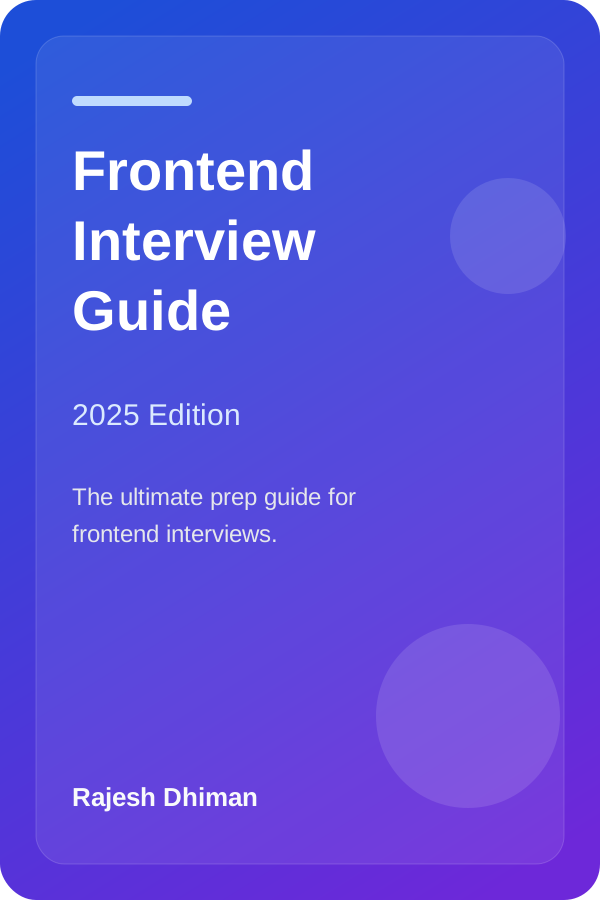
Frontend Interview Guide (2025 Edition)
By Rajesh Dhiman
Comprehensive preparation covering React internals, Web Performance, CSS architecture, and system design questions.
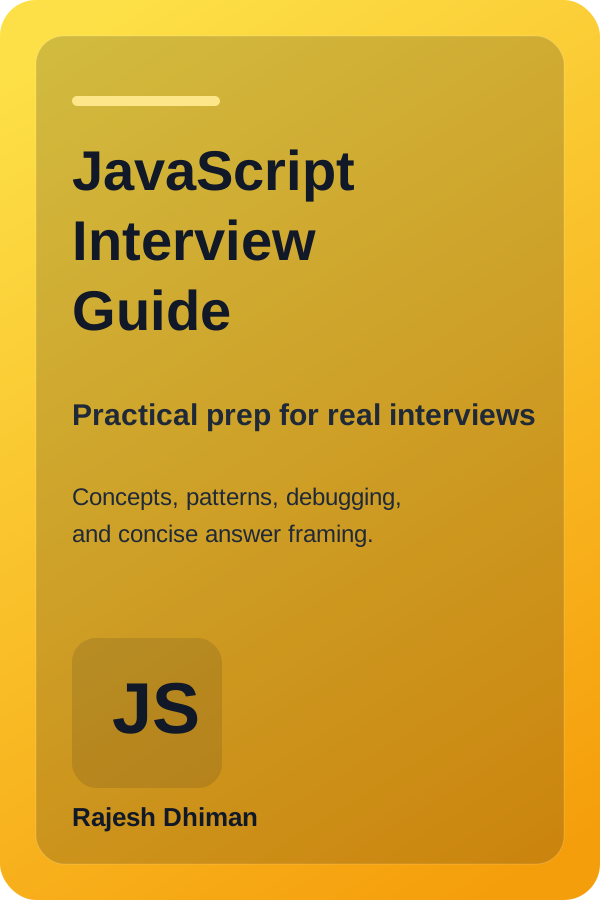
JavaScript Interview Guide
By Rajesh Dhiman
Deep dive into the Event Loop, microtask draining, closures, prototypal inheritance, and asynchronous execution patterns.
Note: All lessons on Frontend Interview remain completely free to read online. As an Amazon Associate, we may earn from qualifying purchases.
Written by Rajesh Dhiman
Authored by Rajesh Dhiman and engineered at Eunix Tech. Focused on deep-dive frontend engineering, JavaScript runtime internals, React architecture, and web performance.