Performance Recipes: High-ROI Fixes (Before/After Patterns)
A collection of practical performance fixes with before/after patterns: LCP hero, INP long tasks, CLS shifts, caching, and third-party containment.
On this page
What you’ll learn
- What fixes tend to produce the biggest wins
- How to think in “before/after” experiments
- Patterns that repeat across almost every product
30‑second interview answer
Most performance wins come from a small set of patterns: optimize the LCP element (usually the hero image), reduce render-blocking resources, cut client JS/hydration, fix CLS by reserving space and stabilizing fonts, and remove/defer third-party scripts. The key is to validate each fix with measurements before and after.
Case study template (copy/paste): make your fix undeniable
Use this structure in PR descriptions and postmortems:
- Baseline (before):
- LCP:
- INP:
- CLS:
- Device/network profile:
- Hypothesis:
- (e.g., “Hero image is the LCP element and is late due to format/priority”)
- Change (one variable):
- (e.g., add
sizes, use AVIF, remove lazy-load for hero)
- (e.g., add
- Result (after):
- LCP:
- INP:
- CLS:
- Guardrail:
- (e.g., CI budget, Lighthouse threshold, RUM alert)
Why this matters: it forces you to measure, not vibe.
Recipe 1: LCP hero image
Before: giant JPEG, lazy-loaded, no dimensions.
After: responsive sources + correct dimensions + priority.
Checklist:
- correct
width/height - WebP/AVIF
- no lazy-load on LCP
Recipe 2: INP long tasks
Before: click handler does heavy work synchronously.
After: schedule non-urgent work and keep handler minimal.
Recipe 3: CLS from images
Before: unknown image size.
After: reserve space.
Recipe 4: CLS from fonts
Before: swap + mismatched fallback.
After: metric-compatible fallback + preload only critical.
Recipe 5: Third-party scripts
Before: everything loads at startup.
After: defer, load after interaction/idle, remove unused tags.
Production rule of thumb
- Don’t guess. Treat fixes as experiments.
- Prefer fewer, bigger wins.
- Re-measure on a throttled profile.
Quick recap
- LCP: hero + critical path.
- INP: long tasks + hydration.
- CLS: reserve space + stable fonts.
- Third-party: defer/remove.
Performance checklist (copy/paste)
- Pick one metric to improve
- Change one variable at a time
- Measure before/after
- Keep the fix if it moves the metric (and doesn’t break others)
Looking for structured, offline interview prep?
Free online lessons • Portable Amazon Kindle / Paperback
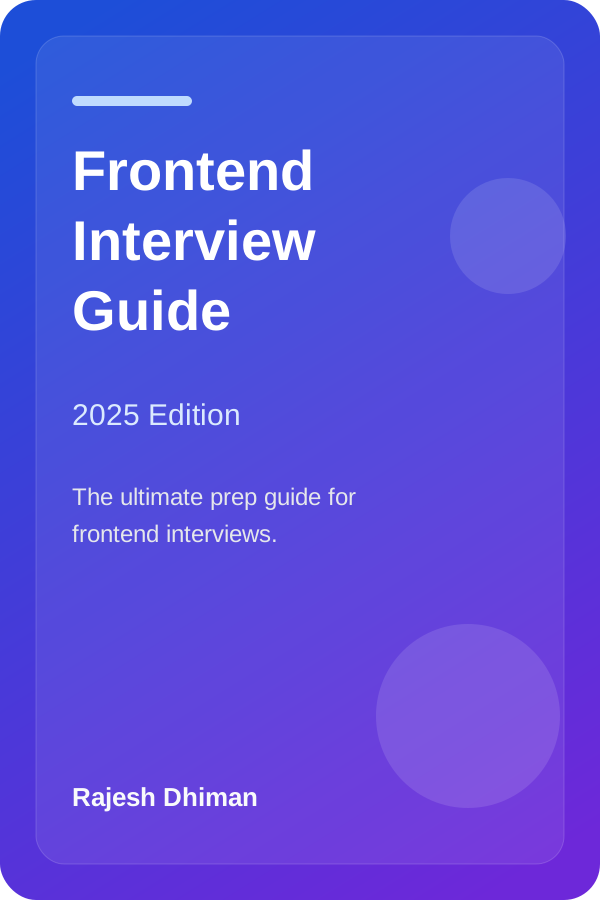
Frontend Interview Guide (2025 Edition)
By Rajesh Dhiman
Comprehensive preparation covering React internals, Web Performance, CSS architecture, and system design questions.
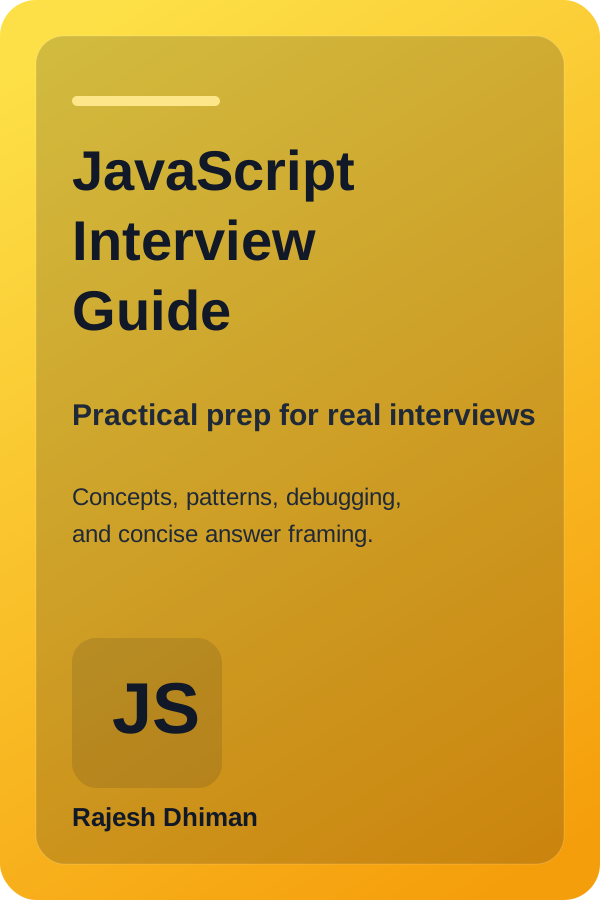
JavaScript Interview Guide
By Rajesh Dhiman
Deep dive into the Event Loop, microtask draining, closures, prototypal inheritance, and asynchronous execution patterns.
Note: All lessons on Frontend Interview remain completely free to read online. As an Amazon Associate, we may earn from qualifying purchases.
Written by Rajesh Dhiman
Authored by Rajesh Dhiman and engineered at Eunix Tech. Focused on deep-dive frontend engineering, JavaScript runtime internals, React architecture, and web performance.